
"I believe God gave me the gifts of creativity and artistry to share with my clients. My work is making their homes more beautiful."
— Luis Bueno
Miami-Dade · Broward · Palm Beach
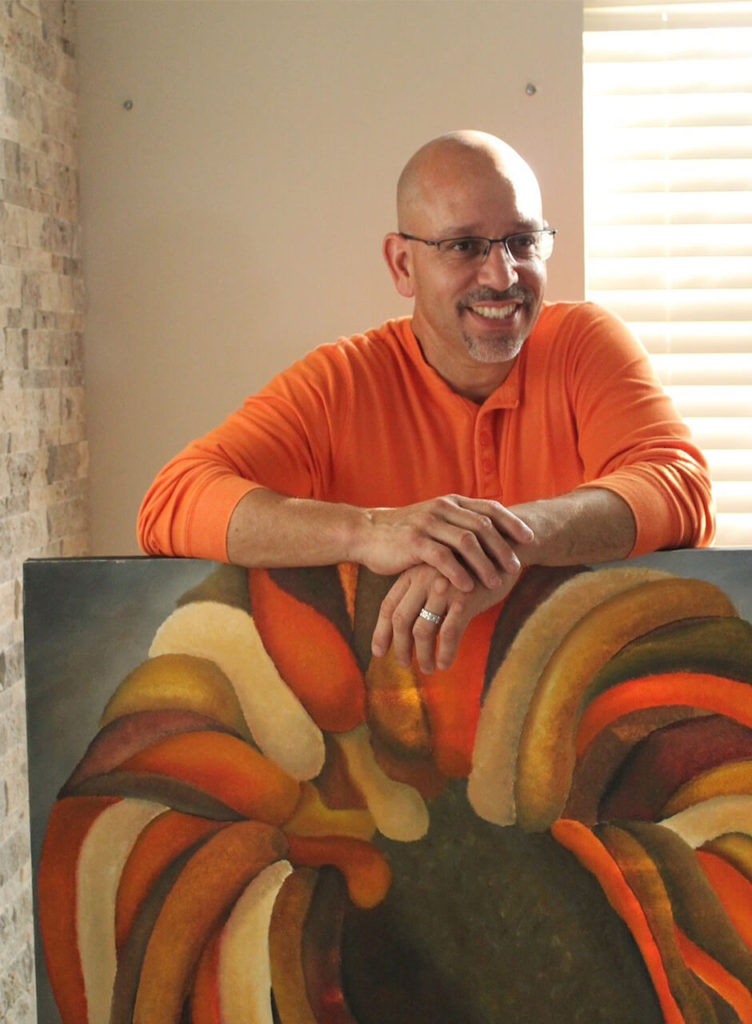
Luis’s Story
Hello, I'm Luis Bueno,
founder of Artistic Tile + Marble.
For more than forty years, I’ve been installing tile and natural stone throughout South Florida. Long before I installed tile, I was making art.
At fifteen, I became one of Miami’s first graffiti artists. Walls, freight trains, and abandoned buildings were where I started. Later I discovered Michelangelo and Leonardo da Vinci. Their understanding of form, balance, and craftsmanship shaped the way I see the world, and they continue to influence my work today.
At eighteen I walked into the Art Institute of Fort Lauderdale without an appointment, carrying my portfolio. A dean offered me a full scholarship on the spot.
I still paint.
Although painting and tile installation seem like different worlds, I approach them the same way. Every project begins with composition, proportion, precision, and respect for the material.
Those principles have guided me for more than forty years—whether I’m looking at a canvas or looking at a floor.

“When Luis finishes a job, you would swear that an artist had been there.”
Terry Haddock
FORTY YEARS. ONE CONSTANT.
What Forty Years Taught Me
Here’s what I’ve seen change over the last forty years.
Tile Got Bigger
A 12 × 12 tile was once considered large. Today, a single porcelain panel can cover an entire shower wall. Fewer grout joints create a cleaner, more contemporary look.
Tile Became Thinner
Porcelain became thin enough to install over many existing floors.
Thinner materials require different cutting, handling, and support techniques—and are easier to damage before they’re ever installed.
Tile Stopped Looking Like Tile
Modern digital printing allows porcelain to replicate marble, limestone, wood, concrete, and dozens of other natural materials.
Every installation begins with layout. Pattern repetition must disappear so the finished floor looks natural rather than manufactured.
Colors Changed
Cool grays have largely given way to warm whites, creams, taupes, greens, and natural textures. Matte and honed finishes have replaced polished surfaces.
Today’s matte finishes reveal imperfections that older glossy tile often hid.
Mortars Evolved
Years ago, cement mortar was often the best option. Today’s polymer-modified mortars are engineered for specific materials and environments. Large-format porcelain, natural stone, glass tile, wet areas, and exterior installations all require different setting systems.
Choosing the wrong mortar may not show up immediately. Eventually, it will.
Grout Joints Became Smaller
Years ago, grout joints were often a quarter-inch wide. Today’s manufacturing allows joints only a fraction of that size. The result is a cleaner, more refined appearance.
Smaller grout joints leave nowhere to hide imperfections in the substrate, layout, or installation. Every measurement. Every cut. Every layout decision becomes visible.
But the Greatest Change?
It’s the one most homeowners never see. Waterproofing systems. Uncoupling membranes. Backer boards. Setting materials. These systems determine whether an installation lasts for decades—or whether tiles crack, loosen, detach, or fail years before they should.
The Biggest Misconception
Most people think they’re hiring someone to lay tile. They’re not.
The best installers are artists who create, designers who plan, engineers who solve problems, and experts who execute with precision. If those decisions are right, no one notices them. If they’re wrong, everyone does.
What to Look for When Hiring an Installer
A beautiful installation begins underneath the tile. Ask how the floor or walls will be evaluated and prepared before installation begins.
Tile and grout are not waterproof. A properly built shower is waterproof before the first tile is installed.
Every installation starts with a layout. Ask where cuts will fall, how grout lines will align, and how focal points will be handled before work begins.
Different materials require different setting systems. There is no one-size-fits-all solution.
The person providing the estimate isn’t always the person installing the tile. Know who will be responsible for the craftsmanship.
Anyone can photograph a project the day it’s finished. The real measure of quality is how it looks years later.
What Experience Really Gets You
Experience isn't knowing how to install tile. Experience is knowing what can go wrong before it does.
Over four decades, I’ve seen cracked floors caused by movement that wasn’t addressed. I’ve seen showers leak because the waterproofing didn’t overlap where it should have. I’ve seen beautiful stone ruined by the wrong setting materials. I’ve seen layouts that distracted from the beauty of the tile instead of showcasing it.
My responsibility is to recognize those problems before they happen and eliminate them long before the first tile is ever installed.
Every home is different. Every material is different. Every installation is different. That’s what experience gets you.
My Signature
Forty years without a complaint.
Hard to believe. Ask Hard Rock Stadium. Ask 15th Street Fisheries. Ask the family living in a house built by a student of Frank Lloyd Wright — or any of the homeowners across South Florida who have recommended me, one house at a time.
I believe that’s because, for the time I’m working in a home, it becomes my home. Every decision matters. Every cut matters. Every detail matters.
Good installation doesn’t depend on what someone spent on the material. My job has always been to understand what my clients want and deliver a perfect installation—one that showcases their tile, stone, or mosaic.
When the work is finished, I leave more than a beautiful installation. And, as an artist, I leave my signature behind.
I measure the space and check the substrate.
If something won’t work, I’ll tell you before anything begins.